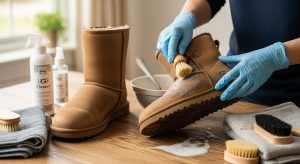
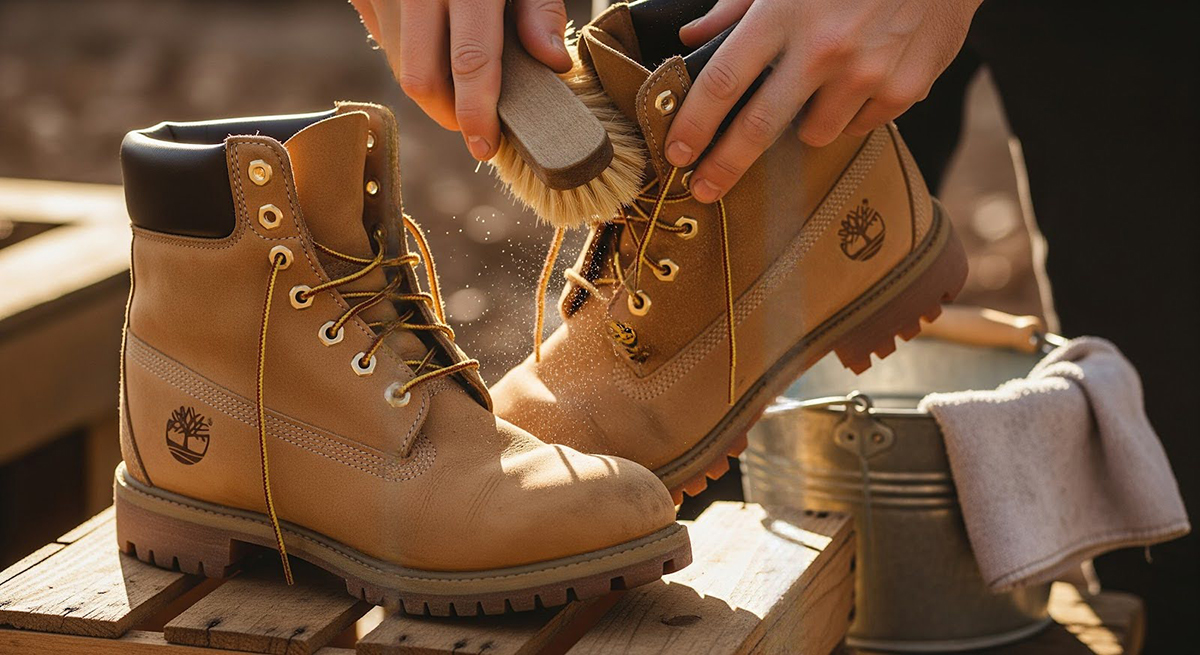
Timberland boots are built for rough weather, but Canadian winters test even durable footwear. Snow, road salt, slush, and temperature swings leave marks fast. Cleaning them the right way protects the leather, keeps the shape intact, and helps them last for years. However, the method depends on the material, the level of dirt, and how wet the boots get. This guide will help you select which approach to take.
Identify Your Timberland Boot Material
Before cleaning begins, confirm what the boots are made of. Timberland uses full-grain leather, nubuck, suede, and synthetic blends. Each reacts differently to moisture and friction.
Full-grain leather resists water better and cleans easily with mild products. Nubuck and suede absorb moisture quickly and stain more easily. Their fibrous surface traps salt and dirt deep inside, and using the wrong technique on these materials causes dark spots, stiffness, or texture loss. If unsure, look at the label inside the boot or the surface texture to confirm what you are working with.
Remove Surface Dirt And Salt First
Dry debris causes long-term wear if left in place, so always remove it before adding moisture. Here are the steps you must follow:
- Take the laces out to avoid streaks and missed areas
- Tap the soles together outdoors to knock loose grit
- Use a soft brush to sweep from toe to heel
- Wipe lightly with a damp cloth, never soaking the leather
Road salt deserves quick attention as white residue pulls moisture out of leather and leaves crystals behind. A slightly damp cloth works for fresh marks. For set stains, diluted white vinegar applied sparingly helps break them down. Let the leather dry between light applications.
Choose Safe Cleaners Only
Leather reacts badly to harsh products. Avoid detergents, bleach, saddle soap, and strong household cleaners because, according to the Canadian Conservation Institute, these strip natural oils and disrupt the leather’s structure.1
Use a leather cleaner formulated for footwear or a very mild soap mixed with water, and keep moisture minimal. Remember: damp cloths clean better than heavy scrubbing.
Nubuck and suede should only be cleaned with brushes or erasers designed for textured leather. For safety, test every product on a hidden spot before continuing.
How To Clean Timbs Without Ruining Them
This concern comes up often, and for good reason. Damage usually comes from excess water or heat.
Timberland boots should never be treated like casual footwear. Unlike canvas shoes that sometimes tolerate a washing machine, leather, nubuck, and suede construction breaks down under agitation, excess water, and spin cycles.
Never soak Timberland boots. Submerging them weakens adhesives and stiffens leather. Despite common myths, you should not wash Timberland boots like sneakers, you need to work slowly and clean just small sections. Lastly, allow the boots to dry naturally between steps.
Drying And Reshaping The Right Way
Drying is where most mistakes happen. Heat dries leather too fast and pulls moisture from inside the hide.
Place boots upright in a cool, ventilated space. Keep them away from heaters, radiators, sunlight, and hair dryers. Stuff the boots with paper or use boot trees to help them hold their shape. Drying can take a full day or longer in cold weather, so do not rush this step.
Conditioning And Protection After Cleaning
Once the boots are fully dry, conditioning helps restore flexibility. This step applies only to smooth leather.
Use a neutral leather conditioner sparingly and buff gently. Nubuck and suede should never be oiled. Instead, apply a water repellent spray designed for textured leather. This barrier limits moisture absorption and slows future staining. Reapply during winter when exposure is frequent.
Odour Control And Interior Care
Moisture inside boots leads to odour and material breakdown. Canadian winter wear increases sweat buildup. Here’s what you need to remember:
- Loosen laces after wearing to improve airflow
- Remove insoles and let them dry separately
- Store boots in a ventilated area, not sealed bins
- Interior moisture often starts with foot perspiration, and long-term exposure from sweaty feet speeds up lining wear and odour buildup inside winter boots
Interior wiping should be occasional and light, and you must allow the boots to dry fully before the next wear.
Fun Fact: Indoor environments kept between 30% and 50% humidity are less likely to support mould and bacterial growth, which helps boots dry properly between wears.2
Long-Term Storage Between Seasons
Seasonal storage affects how boots look next year. Dirt left behind continues to break down leather even when unused.
In this case, you need to clean the boots thoroughly before storage and let them dry completely. Condition smooth leather if needed. Use boot trees or firm paper to prevent collapse. Store them in a cool, dry place away from sunlight. Avoid plastic bags, which trap moisture and promote mildew.
Cleaning Methods By Boot Material
| Boot Material | Cleaning Method | What To Avoid |
| Full Grain Leather | Damp cloth, mild leather cleaner | Soaking, heat |
| Nubuck | Soft brush, nubuck eraser | Oils, excess water |
| Suede | Suede brush, dry cleaning methods | Liquid cleaners |
| Synthetic Panels | Light wiping only | Scrubbing |
When Home Cleaning Is Not Enough
Salt damage, oil marks, and texture loss often need professional treatment. Deep cleaning also helps when boots lose structure or colour consistency. At that point, professional shoe repair and cleaning services are better equipped to lift embedded salt, rebalance moisture, and restore texture without stressing the material.The Best Way To Clean Timberland Boots And Keep Them Looking New
Consistency matters more than intensity. Here are some points you need to remember:
- Light cleaning after wear prevents buildup.
- Quick salt removal protects the leather surface.
- Proper drying keeps the structure stable.
- Conditioning maintains flexibility.
Avoid shortcuts, especially when winter grime piles up fast. Following this routine reduces the need for aggressive cleaning later.
Final Thoughts
Knowing how to clean Timberland boots properly saves money and avoids disappointment. If your boots need deeper care or restoration, Love Your Shoes offers professional cleaning and repair services designed for Canadian conditions. Request a quote today!
References
- Canadian Conservation Institute. Care of Alum, Vegetable, and Mineral Tanned Leather. CCI Notes 8/2, Canadian Conservation Institute, 1992.
Health Canada. Healthy Home Guide. Government of Canada, Oct. 2022, www.canada.ca/healthy-home.